
Unlike most gins, which are built on commercially produced grain spirit, Alvearium Gin begins its journey in Zambia’s forests.
“Alvearium Gin is an exceptionally smooth premium gin distilled from wild African honey, crafted to be enjoyed slowly and appreciated for its unique character.”
That honey is harvested by rural beekeepers using traditional methods that depend on healthy, standing forests. It’s a model that ties production directly to conservation.
“For us, sustainability means creating economic value from standing forests by supporting rural beekeeping communities that depend on healthy indigenous woodlands rather than deforestation.”
In a landscape where environmental pressures are real, this approach creates a clear incentive: protect the forest, and it continues to provide.
Choosing honey as a base ingredient was not just a flavour decision, it was a deliberate departure from convention.
“Unlike traditional gins made from grain spirit, we produce our own premium spirit entirely from wild honey, creating a distinctive flavour profile and sustainability story that is unique in the gin world.”
The process itself is complex. Honey must first be fermented into mead, one of the oldest alcoholic beverages known to mankind, before being distilled into a base spirit and redistilled with botanicals.
“Honey is a very expensive sugar source to convert into spirit, and developing the technology to do this efficiently took several years. We are currently the only distillery in Africa to successfully produce a honey-based spirit in a way that is both commercially viable and scalable.”
It’s this control, from raw ingredient to final product, that sets Alvearium apart.
The idea behind Alvearium was ambitious from the outset.
“Alvearium began with the vision of proving that premium world-class spirits could be produced sustainably in Africa using wild honey and innovative fermentation technology developed over several years.”
What has emerged is not just a product, but a statement: that African innovation, natural resources, and craftsmanship can compete on a global stage.
That ambition has already been recognised internationally, placing Alvearium among a growing group of premium African brands gaining attention for both quality and purpose.
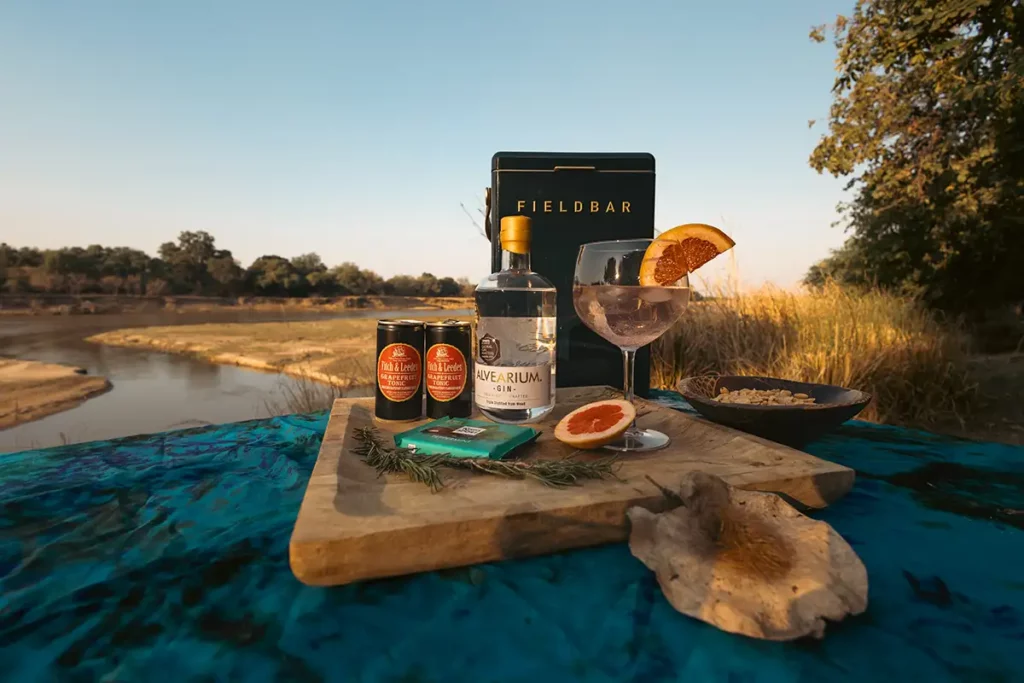
For the travel trade, products like Alvearium offer something more than just a beverage. They add depth to the guest experience.
“Alvearium naturally complements the safari experience by connecting guests to the surrounding environment, conservation, local culture, and the story of African honey and sustainability.”
It is easy to imagine: a sundowner overlooking the Zambezi, the sounds of the bush settling into evening, and a gin and tonic that reflects the very landscape around you. It also lends itself to being a meaningful food souvenir, giving guests a tangible way to take a piece of the destination and its story home with them.
For those tasting it for the first time, the recommendation is simple.
“We always suggest enjoying Alvearium first over a large block of ice before adding tonic, with grapefruit tonic and a Bee’s Knees cocktail being two of our favourite serves.”
At its core, Alvearium is about more than gin.
“Our vision is to establish Alvearium as one of Africa’s leading premium spirits brands while showcasing how sustainable African products can compete with the best in the world.”
It is a vision that speaks not only to the future of one product, but to the broader direction of tourism and trade across the region.
Because sometimes, the story of a destination is not just found in its iconic landmarks or wildlife.
Sometimes, it begins in the forest… and ends in the glass.
