
Chef Sungani Phiri takes diners on a culinary exploration of his homeland from his chef’s house in Livingstone, Zambia, a rising hub for Zambia culinary tourism.
Vinkubala. Lumanda. Impwa. Busika. Mabuyu. Mongongo. These are not words that are often found on degustation menus.
But they are found in the kitchen and in the dishes and on the tongues at Sungani Restaurant, Livingstone’s newish (it opened in April) home of fine dining – and now listed by Top 25 Restaurants.
For those needing a translation, vinkubala are caterpillars, sometimes called mopani worms. They’re just one of Zambia’s edible insects and a common dish in the north of Zambia. Sungani dries them, grinds them to a powder, and uses it as a seasoning.
For those needing a translation, vinkubala are caterpillars, sometimes called mopani worms. They’re just one of Zambia’s edible insects and a common dish in the north of Zambia. Sungani dries them, grinds them to a powder, and uses it as a seasoning.
Lumanda is a sour vegetable; impwa is from the eggplant family; busika is wild tamarind; and mabuyu is baobab. In Zambia, baobab leaves are eaten as a vegetable relish, its seeds are a source of vegetable oil, and its fruit is rich in antioxidants. Mongongo, of course, are nuts and are eaten across the region.
Sungani also uses katapa, or cassava, and mabisi, or sour milk.
This is important, for Chef Sungani is all about merging the richness of traditional Zambian flavours with the artistry of international culinary techniques. “We are pioneers, shaping the gastronomic landscape by introducing the world to the extraordinary tastes of Zambia,” he says.
The chef is one of those folk putting Zambia on the world’s tourism map. And the news is good: 1.2 million international tourists visited in the first half of the year, putting it on course to reach the target of 2.4 million international visitors in 2025 set by the Ministry of Tourism.
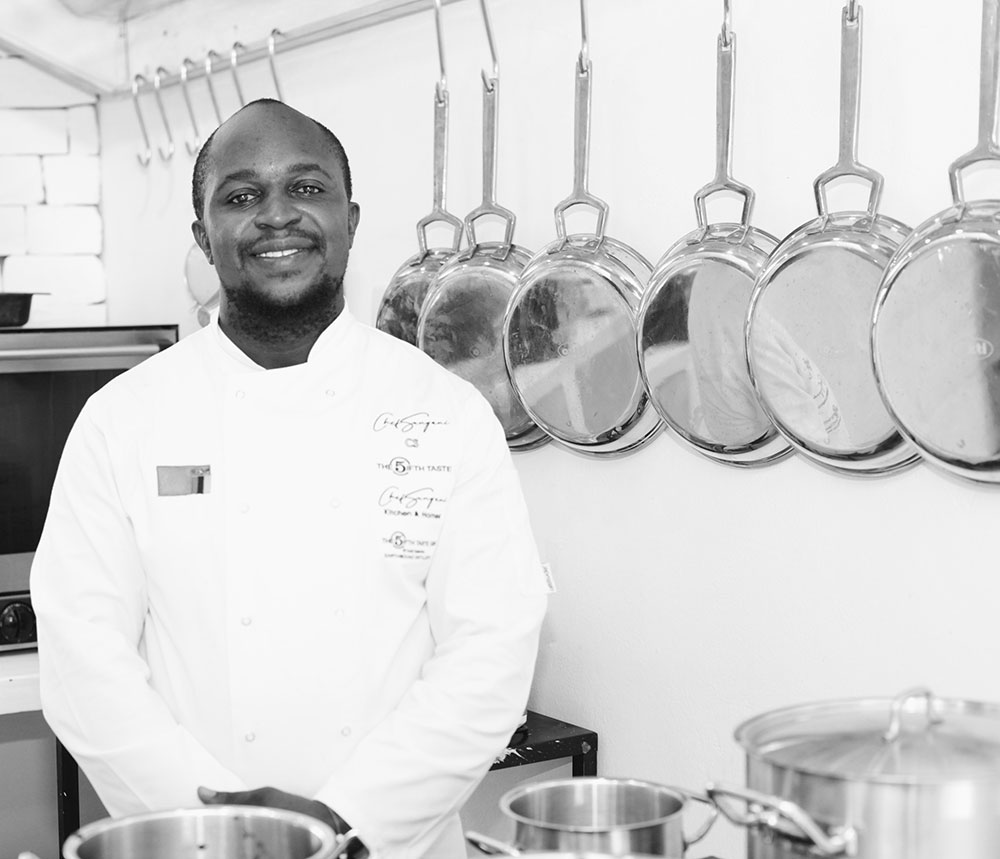
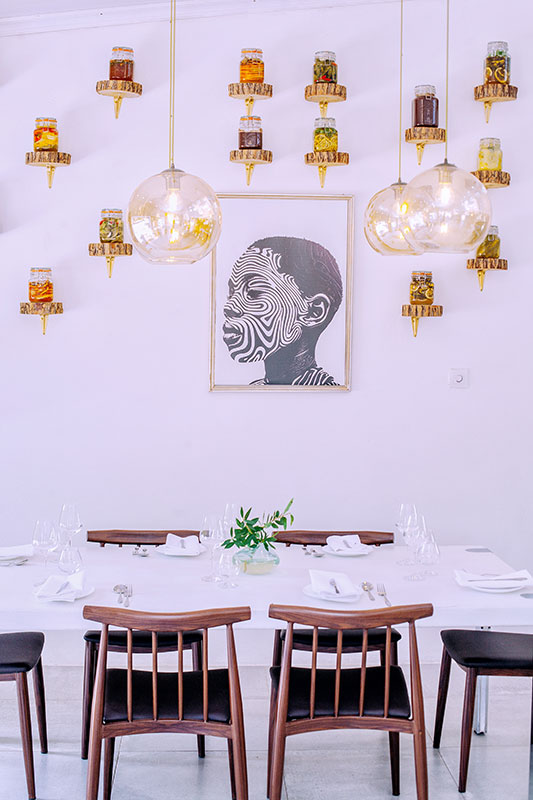
Sungani Restaurant is run from the chef’s home in a standard suburban neighbourhood. It’s an intimate 22-seat space, including the Chef’s Table, right next to the kitchen and where the Phiri family frequently gathers. There is also seating outside, under the stars.
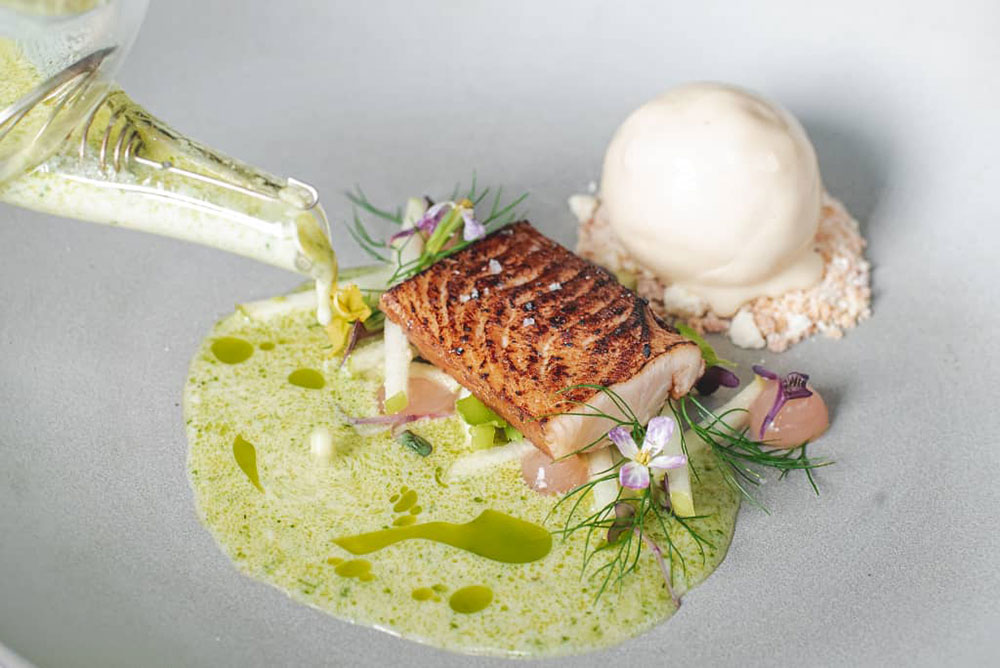
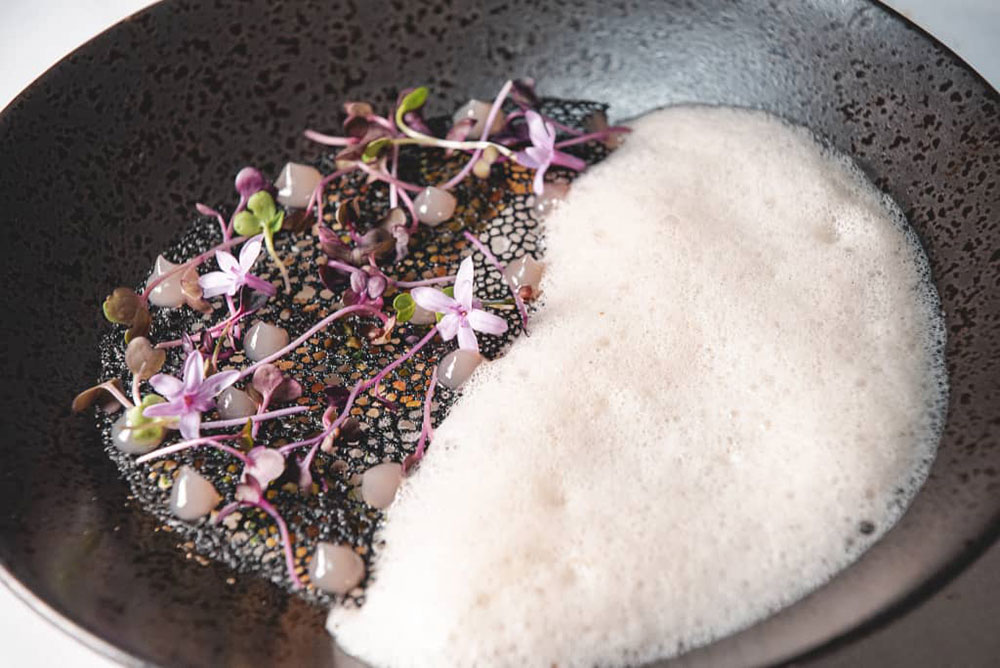
Here, the chef and his team serve a multi-course seasonal tasting menu made entirely from local produce, and plated with an eye on the aesthetics and creativity of world-class chefs. He sees his work as a celebration of Zambian culture, ingredients and soul, a return of sorts after studying and working in South Africa and in other African countries.
In Zambia, he was the head chef at Royal Chundu for nine years, and opened Botanica in Lusaka at Ciêla Resort and Spa before setting up shop in the tourist hub of Livingstone.
Sungani has spent the past few months building networks and relationships in his adopted town. “It’s creating different partnerships such as with African Eden, like Bushtracks, trying to collaborate with the hotels and the lodges within the area. You have to perseverance and to have the patience to understand that you’re a new product on the market.”
His work is a bold step forward for Zambia culinary tourism, adding depth and flavour to the country’s cultural travel offerings. Through his restaurant, he is adding to the whole tourism package in Livingstone. It has long been a second fiddle to Victoria Falls, which has a well-established tourism offering. But the view of the falls from the Zambian side, coupled with access to Livingstone Island, should be drawing more tourists than it does.
Partially, at least, because there is a paucity of offerings. But the culinary scene is evolving: there is Mukwa River Lodge, Savannabel Bush Gourmet, Chef Sungani… And the latest tourism figures puts occupancy at its hotels at 70% by June.
“We’re breaking down 16 courses that tell a story and showcase what Zambian food can be”
“What we’re doing is obviously different from everyone else. It isn’t something that’s happening within the region. And when I mean region, I mean Angola, Zimbabwe, Botswana. No one’s doing a degustation menu that celebrates the cuisine of that land.
“We’re breaking down 16 courses that tell a story and showcase what Zambian food can be and with the intention of consistently growing, expanding, not limiting it just to restaurants, but eventually over 10 to 20 years into high-end chef houses.
“Because this is the chef’s house. It’s been converted into a restaurant. But inevitably, the chef’s house will offer accommodation and will offer numerous experiences similar to that. Showcasing food, hospitality at large.”
He takes his position and skills seriously, investing substantially in training young people in culinary arts. “You don’t have a surplus amount of [skilled] manpower [in Zambia], so training is a prerequisite. We’ve been doing it since we started.
“I work with a lot of the lodges in the area. I do workshops … And this is open to everybody. It’s not just for chefs. It’s not just for lodges. It’s open to anyone who wants to acquire a specific skill, understand the fundamentals of cooking.”
He is almost spiritual in his outlook: “I don’t believe what I’ve been given as a gift and a skill is mine to keep. I believe it should be passed on. It should keep being evolved by other people.”
Hospitality by default is something that Zambians do, Sungani points out, though it differs from the European approach of hospitality. “But we are very welcoming people. We are very willing to help. Willing to share. Now to stretch that into hospitality … there can be an integration of culture as well. How we greet in Zambia should be integrated into our service approach.
“That’s something that we want to embed in our restaurants and in the properties to come.”
Chef Sungani runs the kitchen, the cooking and the menu creation. His wife, Alibesi Mwale Phiri, is the director of operations and the brand director. She is focusing on expanding the brand into merchandise and other hospitality avenues.
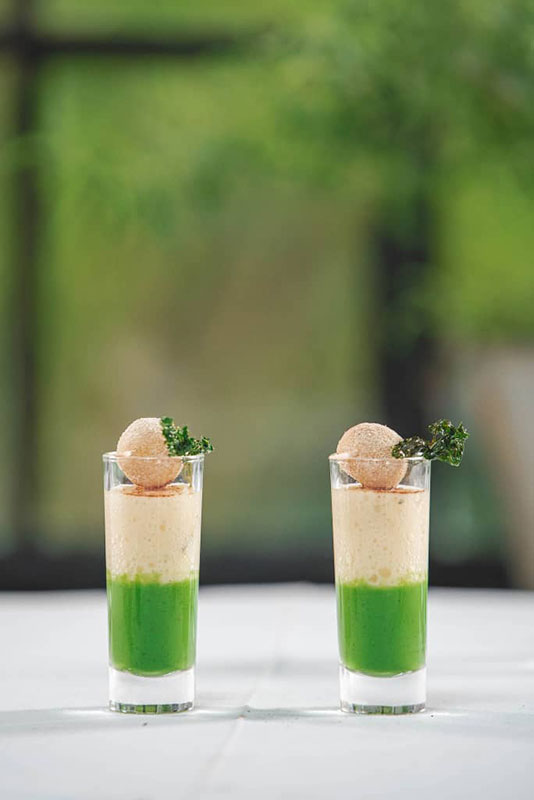
“I’ve taken my culinary training from South Africa, which was at a school that was run on the Swiss system – all those culinary methods, the basic cooking methods, the way to approach gastronomy – and applied them to local ingredients. Converting things like kapenta, which can be a bit of an acquired taste, into a macaroon for example by changing its entire essence. Or converting bondwe, which is a wild spinach that grows all over Zambia, into a savoury marshmallow.”
He started this journey in Zambia more than 12 years ago where he initially offered a Zambian Tasting Menu. He refined it at Botanica where “we were a racehorse given the freedom to run”. In the year in Lusaka, Sungani created 12 menus, but felt he had not even hit the tip of the iceberg.
He tells me some of his tricks. Mongongo nut is converted into a chocolate praline, served with a vitumbua (an East African pancake made with cassava flour) and a New York-style cheesecake made with mabisi.
“a great chef should know how to preserve the land and preserve the ingredients that they’re cooking.”
Sungani credits his sister for the direction his cooking has taken: “The tasting menu was really created because of an argument with my sister. When I finished hotel school and my stint in South Africa, she said, since you’re going back to Zambia, are you still going to cook French cuisine or German cuisine – because my mentor is German. And I said to her, yes, that’s the only way to cook … It’s the best food in the world. This is what we’re going to do.
“And she said, but don’t you think that’s pretentious? This battle I lost and that’s the reason the tasting menu has been created.” In his initial interview in Zambia, he was asked what he was going to do that was different, and answered: “I’m going to pioneer Zambian cuisine. They held me to it and I had to create.”
Sourcing locally is important, and Sungani tries to source everything used in his restaurant from within a 100km radius of it, from the local markets and the local fishermen.
“One, it sells the story of a Zambian tasting menu, because there’s nothing more Zambian than getting from your land. Two, [it’s important] from a sustainability point of view, because a great chef should know how to preserve the land and preserve the ingredients that they’re cooking.”
This is the plan; he has no Plan B. And it’s through stories like these that Zambia culinary tourism is carving out its own global identity rooted in tradition and plated with purpose.
“I’m headstrong about it. I believe that this is the only way my story can be told to the world.”
