The Zambezi Working Donkey Project is a tiny team tackling a big problem: saving these important creatures through education and veterinary care, writes Lorraine Kearney
Donkeys are not glamorous. They’re not racehorses, they’re not beautiful or elegant. They’re not cute and cuddly. They’re not the heroes in the movies.
Think of donkeys and you think of Shrek’s unhinged sidekick, of gloomy Eeyore, of Nick Bottom making an ass of himself. But come on, think harder. Donkey may be talkative and irritating, but he’s also loyal, persistent, resilient, and thoughtful. Eeyore may be depressed, but he’s also steady, observant, empathetic, and wise.
(Nick was, well, a Bottom).
Donkeys have a starring role in symbolism, too: Jesus rode into Jerusalem on a donkey to signal a peaceful transition of power. In biblical scholarship and ancient Near Eastern archaeology, a horse represents war and military might, a donkey represents peace, humility, and service.
Donkeys appear in various ancient myths, often tied to humility, service, or chaos – the very definition of a donkey, in fact. You find donkeys in Egyptian lore and Greek tales. And they’re important. In the Code of Hammurabi of Mesopotamia, for example, they appear in laws governing hire, theft, and liability.
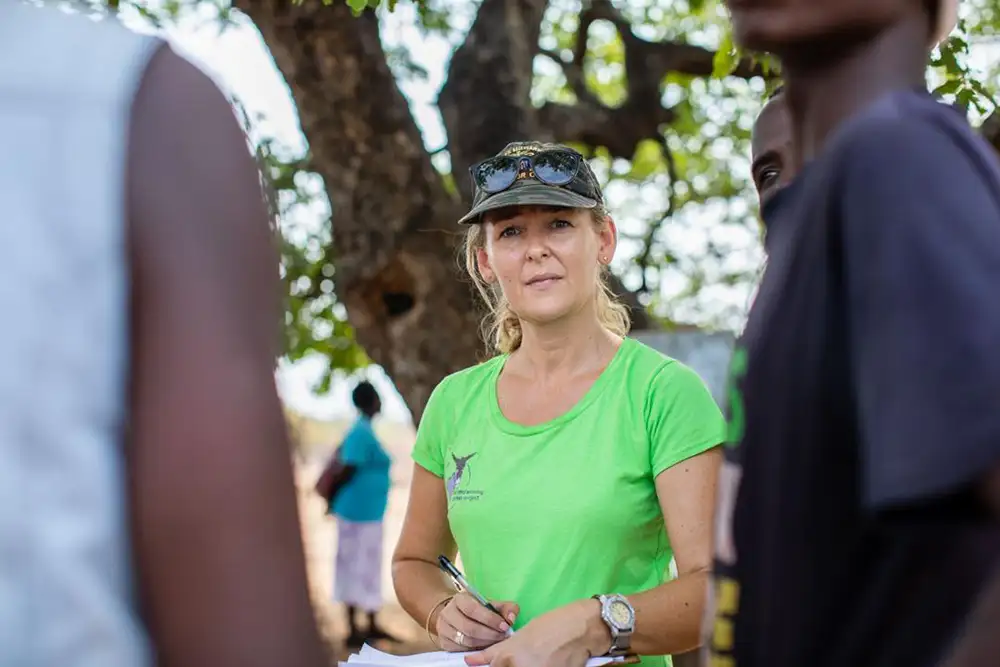
These things are running through my head when I talk to Hesther Levy, founder and director of the Zambezi Working Donkey Project (ZWDP) in Livingstone, Zambia. My mental images were sparked by a couple of questions I ask her: why donkeys, and what is something about donkeys that most people get completely wrong?
I have; they’re stubborn, pig-headed, ornery.
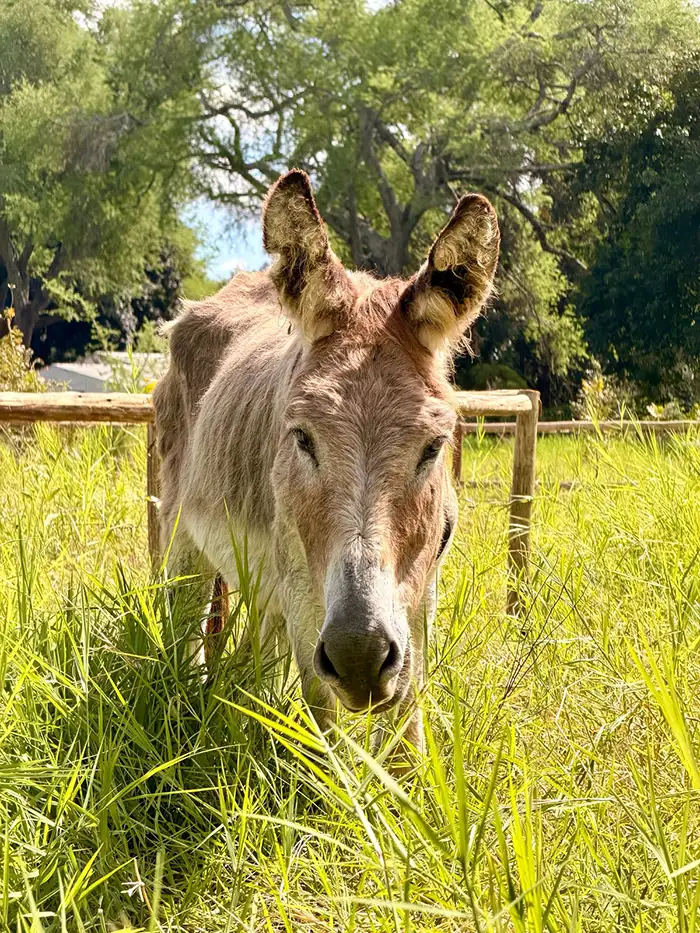
She counters: ‘They’re gorgeous. They’re characters. They are very stoic and long-suffering.’
Turns out, I get it completely wrong.
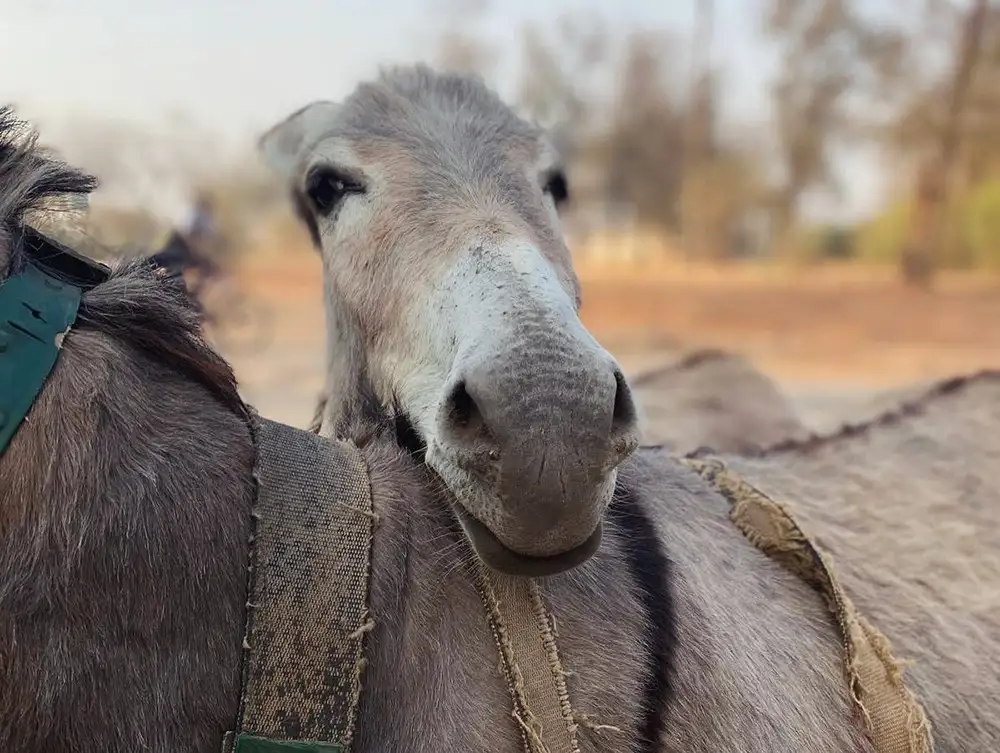
‘The most misunderstood thing about donkeys is that their caution and intelligence are mistaken for stubbornness. Horses tend to flee when scared, but donkeys are desert survivors that stop, assess the situation, and think things through to ensure their safety. If a donkey considers a situation unsafe or doesn’t understand a request, it will refuse to move, which is commonly, but wrongly, labelled as stubborn.’
They are highly intelligent and often bond deeply with humans, but they need trust to follow instructions, rather than force. Hesther gives me the advice of experienced handlers:
"you ‘tell’ a horse, ‘ask’ a mule, and ‘suggest’ to a donkey."
They’re also very clever. Studies suggest that donkeys can solve complex problems and learn new skills as quickly as dogs or dolphins. They can remember places and other animals for up to 25 years.
But crucially, ‘they tend to hide pain, fear, or discomfort, meaning they need careful, observant owners to spot when they are struggling’.
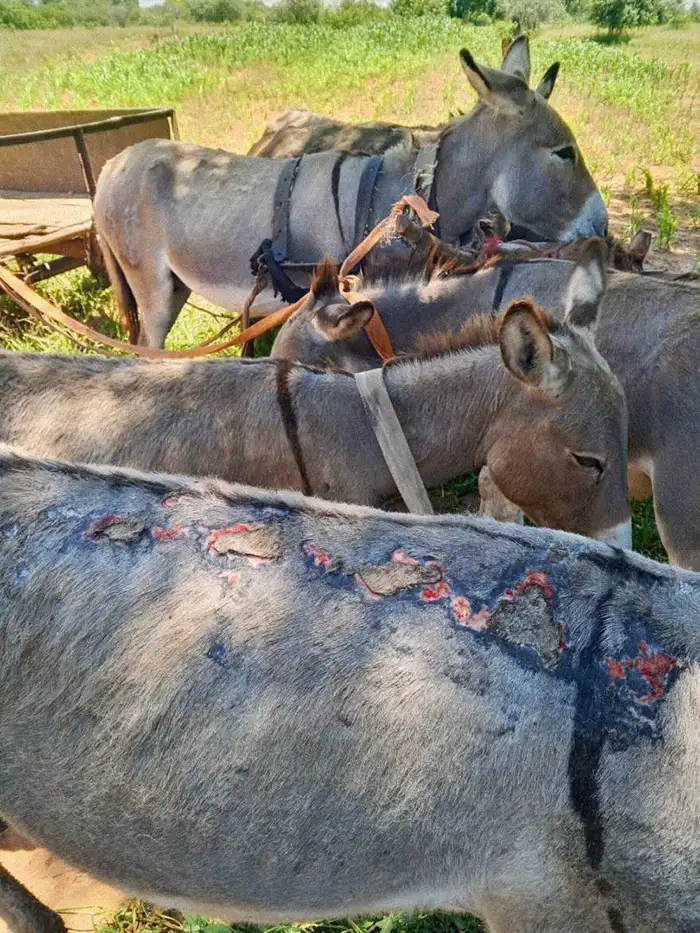
"Donkeys in Zambia are often worked with equipment designed for oxen, causing severe injury and long-term damage."
And that’s where the ZWDP steps in. It was established in 2018 to educate the owners of working donkeys in Zambia’s Southern Province, and to work towards ending abuse and exploitation.
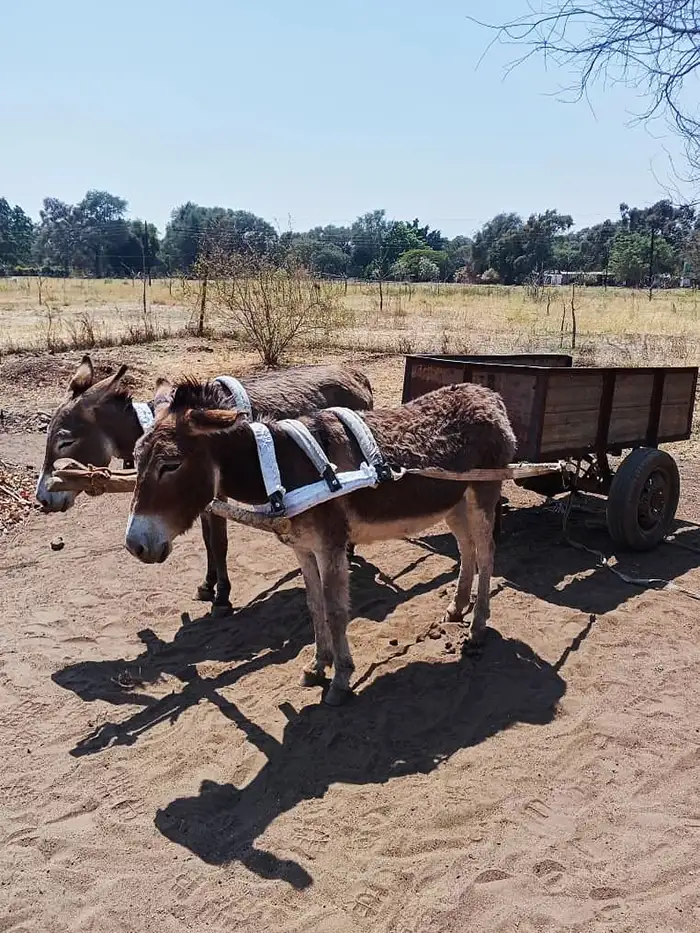
The issue is largely one of ignorance. Donkeys have only been used as working animals in Zambia – mostly on poor rural farms – for the past 15 years. Before that, oxen were used. Cattle were badly affected by disease about two decades ago, and the government imported donkeys from neighbouring countries. People simply switched their heavy wooden ox yokes to their donkeys, and hitched up heavy, unsuitable carts.
But a donkey is a different animal and the ox yokes cause tremendous neck damage, carts are overloaded and the animals are overworked.
‘There is a monetary value put on donkeys, but there’s not that much of a direct correlation between the perceived value of the donkey and how well people look after it.
‘For many people in the areas where we work, their donkey is their most valuable asset and we have to try to encourage a mentality where people look after it. If they do, it’s going to be stronger, it’s going to live longer, it’s going to work harder.’
The ZWDP aims to improve the lives of working donkeys and support their owners in a practical way by educating people about how to care for their animals through theoretical workshops and practical sessions at its outreach clinics; by providing training to make harnesses and modify carts and ploughs so they are appropriate for equine use; and by rescuing and rehabilitating animals.
The project is also opening a visitors centre at Maramba Farm, where visitors will be able to meet the rescues. It’s part of the education centre, where there is a classroom for school groups and community groups, and a veterinary lab.
‘Now we’re opening for tourists. You come, you meet the donkeys, you can give them a brush and a treat. And then you can have a farm tour, you can have a picnic, and at some stage we’ll open a small café here.’
It’s all managed by a tiny team. There is Dr Audrine Nkana, the veterinary programme manager; Nyambe Lungowe, the education and community liaison officer; and Emmanuel Kashweka, the programme supervisor, community outreach and harness programme.
‘We work with two main partners. Worldwide Veterinary Service supports out veterinary outreach, the diagnostic laboratory, veterinary student training and education programmes.’
Training Zambian veterinary students from the University of Zambia in large animals and equines falls under this partnership.
‘There’s a real lack of qualified equine vets in Zambia so we want to grow that,’ Hesther says.
‘Our other major partner, which has worked with us the longest, is Animal Aid Abroad, an Australian organisation. It supports our outreach and mobile clinics, harness programme and rescued donkeys at Maramba Farm.’
Donations cover everything else, including staffing and feed. And you can adopt a donkey.
‘A massive part of what we do is education and we are seeing an improvement in the areas that we’ve been working in for several years. But when you go to new areas, it’s like going back in time and starting from scratch,’ she says.
‘I’m really proud of the progress that we’ve made so far. When we started there were no harnesses at all. Now I would say that in the areas we work in there’s probably about an 80% uptake of the harnesses.’
The challenge is maintenance – harnesses wear and break. Nyambe is looking at ways to make the programme sustainable so that people maintain them because they see the benefits of using them. At the moment, it’s easy just to ask the ZWDP for a new one or use an old wooden ox yoke.
The help is both free and for a fee.
There is a small payment for the harness programme – ‘we need people to understand that they have an obligation to take care of their harnesses themselves’. New donkey owners get their first set for free. Thereafter, there is a payment structure for repairs or new padding or a new set. ‘It doesn’t cover the cost for us to make the harness, but it’s symbolic that people have to have to take ownership of it.’
Veterinary treatment is free. It includes dipping and deworming, and treating injuries.
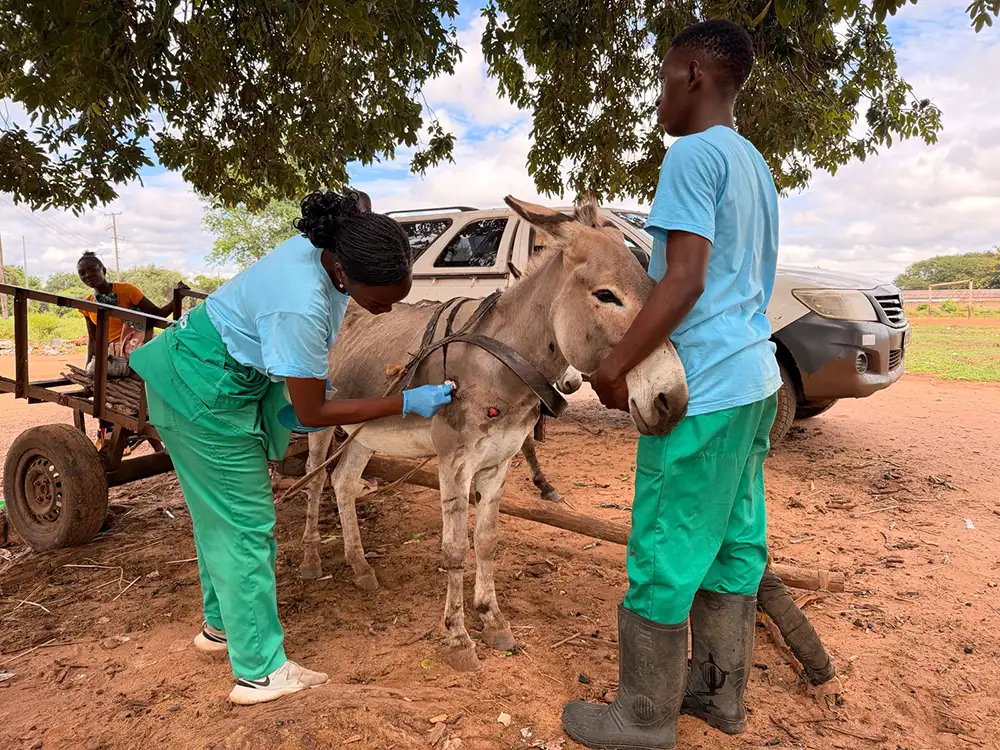
‘Black was our first rescue. She came here with her hoof completely pulled off.’
That’s another thing I learned: donkeys can lose their hooves; and if it’s a front hoof, not much can be done.
‘It happens a lot; it’s one of our biggest issues. People tie donkeys to a tree with rope or wire around their fetlock and then the donkey tries to break out in the night or it fights or something. Quite often they break their hoof and rip the whole foot off.’
It’s a complex issue. There’s abuse through lack of knowledge, and then there’s plain cruelty. In response, there’s education about how to look after donkeys and the value in doing that. And then there’s education about animal welfare laws. Most people don’t know that those laws exist.
‘There’s a certain amount of empathy and understanding around lack of knowledge,’ Hesther says, ‘but when someone is intentionally cruel and violent towards any animal, there has to be repercussions and there has to be accountability for that.’
This sort of work can be emotionally challenging.
‘To be blunt, you become hardened to it over time. To begin with, I would be in tears every time we went anywhere. Your response is not, ‘what’s the best thing to do in this situation?’ You become emotional and you react from that, which isn’t really helpful to anybody.’
Now Hesther and the team have a more solutions-based response.
‘Yes, we have to fix the problem but what we actually have to do more than fixing the immediate problem is create a situation or a level of education, change mindsets, so that that problem doesn’t happen in the first place. That’s what we are focused on.’
Nyambe is developing new ways to deliver the message in local languages in a way that culturally makes sense to people.
‘It’s absolutely no good, you know, someone from the UK or the Middle East or even another country in Africa bringing something to the Zambian context and expecting what’s worked there to work here.
‘A lot of content is similar but the way you deliver it, and making it sound relevant to people in a way that they can relate to, so they can see it benefiting them, that’s the key to it.’
A last question – is it working?
‘We have a good relationship with the communities that we work with. I love that people come to us for help now. If there’s a problem with their donkey, whether it’s an accident or intentional or it’s just sick or they don’t know what to do, people do come to us. They know that we’re here, they know that there’s someone they can call. We are definitely making a difference.’
The Zambezi Working Donkey Project is a proud Community & Conservation Partner of Africa’s Eden, part of a network of vetted, locally led organisations working to protect the region’s landscapes and wildlife and support local communities. For more on the role of working donkeys and why they matter, read our World Donkey Day feature.

