Using local art and traditional craftwork in building design and décor gives an unmistakeable sense of place to lodges and camps, writes Lorraine Kearney.
On the last night at Toka Leya, in Mosi-oa-Tunya National Park, outside Livingstone, after the elephants had wandered deeper into the trees and the hippos were snuffling under the deck, there was a soft knock on the door.
A gift was delivered, a gorgeous chitenge, in shades of blue scattered with bright yellow flowers: ‘Take a little part of Zambia home.’
I fell instantly in love, the smell of the fabric even today, thousands of miles away, reminding me of the beauty of Zambia and transporting me back to the Zambezi River.
A chitenge – which is also spelled kitenge – is a traditional piece of cloth you’ll find across central and southern African countries. They’re generally made from 100% cotton and have vibrant patterns created using industrial wax printing or traditional batik techniques.
They’re so common across Zambia, they’re often simply called zambias.
Wilderness says across most of rural Southern Africa, a chitenge is customary as everyday dress, at funerals, rituals and ceremonies.
They’re commonly used in a two-metre by one-metre rectangle, and are worn by women, wrapped around their chest or waist, or over their head as a scarf. They are used as a sling to carry a baby on a woman’s back, and cover her front when she’s breastfeeding. They’re baby blankets, they’re sarongs, they’re protection for your clothing when you’re doing housework; they’re picnic blankets, they’re table cloths, they’re wall hangings, even curtains.
Rural women use them to cover their hair so it doesn’t smell of smoke from cooking. They coil one onto the crown of their head as padding when fetching water.
More than anything, they’re beautiful – I now have several, my collection sparked by that initial goodbye gift from Toka Leya.
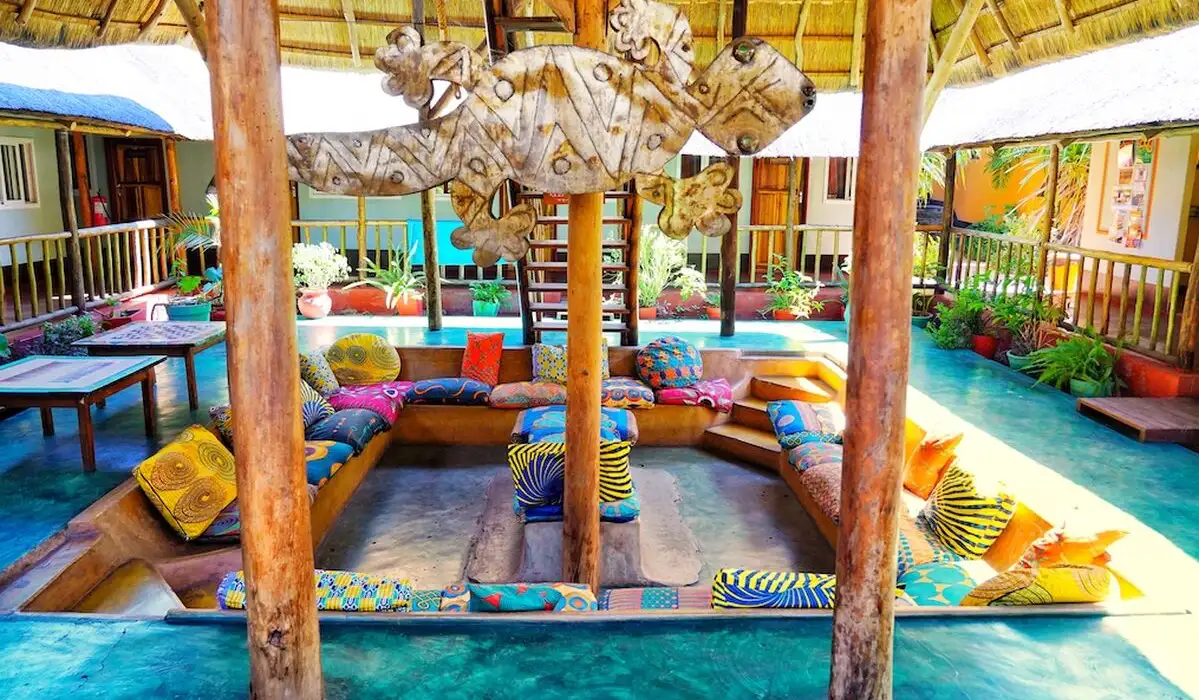
Jollyboys Backpackers and Camp in Livingstone is known for its happy space and bright décor. Throughout the lodge, local craft and design can be seen. Chitenge cover for all the soft furnishings and there are various up-cycled artworks made by local artisans using Jollyboys’ own waste, such as bottletops, cans, excess wood and building materials.
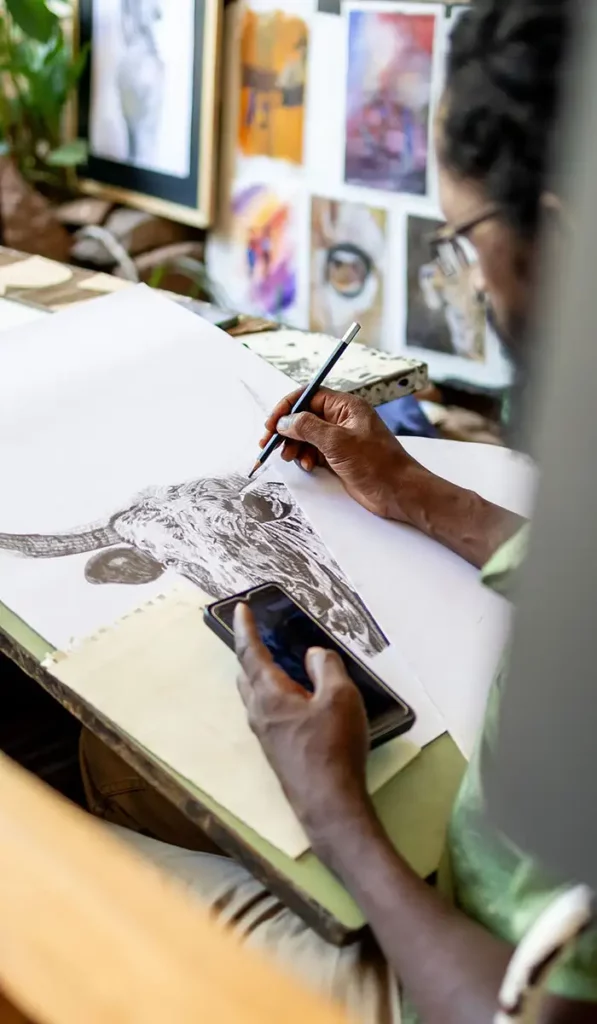
‘We also host a residents artist’s programme, whereby local artisans can use our communal spaces to create and showcase their work, free of charge and with no commissions taken,’ they say.
‘We love how using local materials and incorporating the work of local artists feeds into the overall atmosphere of the lodge, always coming back to the vibrancy of Zambian culture and its people.’
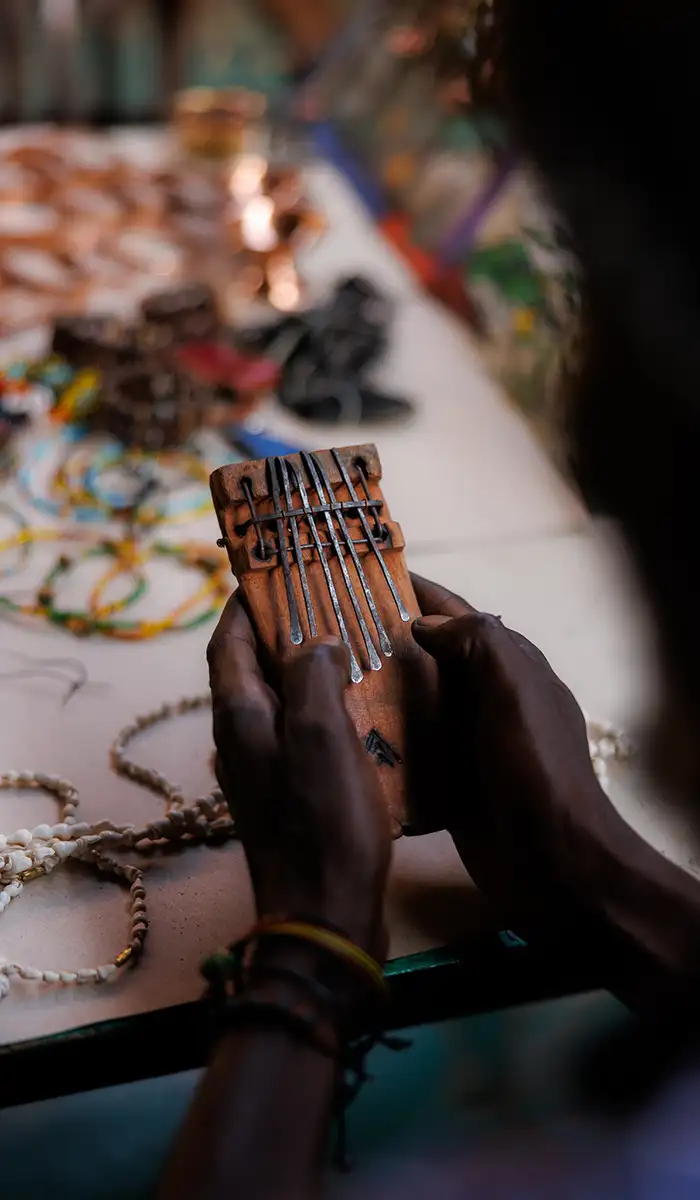
Such a celebration of heritage and craft is common at lodges and camps across Africa’s Eden. At Kaingu Safari Lodge in the Namwala Game Management Area bordering Kafue National Park, in Zambia, local crafters make interesting items such as tie-backs for mosquito nets using seed pods and beads. You can buy a variety of crafts at the camp’s shop to take home.
You can also spend the night in a Tonga treebasket. Made from local muchinga trees, they are perfect for an unusual sleep-out under the stars, so close to nature you’re part of it.
At Camp Khwai in the Okavango Delta, on the permanent Khwai River, craft is used in the lodge design.
Tessa Bell from The Pack Africa explains that Camp Khwai has used traditional Botswana baskets as a key feature in the tents, with a basket wall as the focal point of the room.
‘Local artisans were involved in building the camp as well as the basket weavers and with Khwai village nearby, the camp is a great destination for anyone wanting to combine cultural exchange and wildlife.’
Owners Kefhilwe and Ronnie Mokotedi have created a space that is a celebration of Botswana and its craft, and is comfortable and stylish.

In Zimbabwe’s Hwange National Park, The Hide’s Angie Christie says heritage and craft are very much at the heart of how they shape the guest experience.
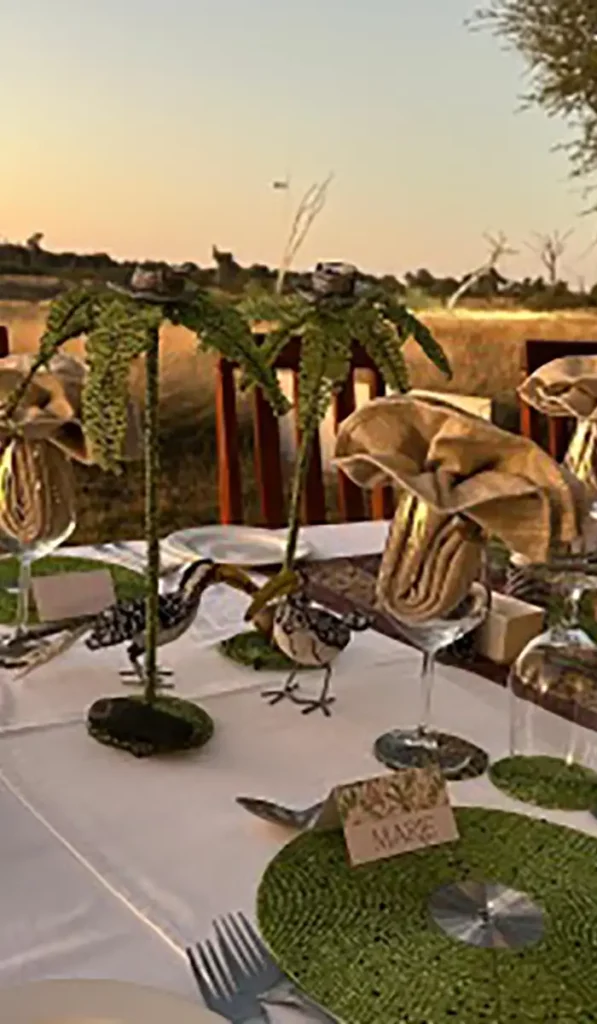
‘At The Hide, we work closely with locally made beaded pieces, using them to create a distinct safari tablescape for dinner each evening. Each setting is thoughtfully styled to reflect what guests may have seen in the morning or what their favourite animal is and this allows us to connect local craft with exceptional dining experiences in a way that feels both authentic and ever-evolving.’
The Hide uses handcrafted local beadwork in its daily dining setups, reimagining the tablescape each evening – and if you like them, you can buy them in the curio shop.
These evolving tablescapes create a sense of occasion and storytelling, turning dinner into a curated safari moment, says Angie.
All safari roads seem to lead to Victoria Falls…
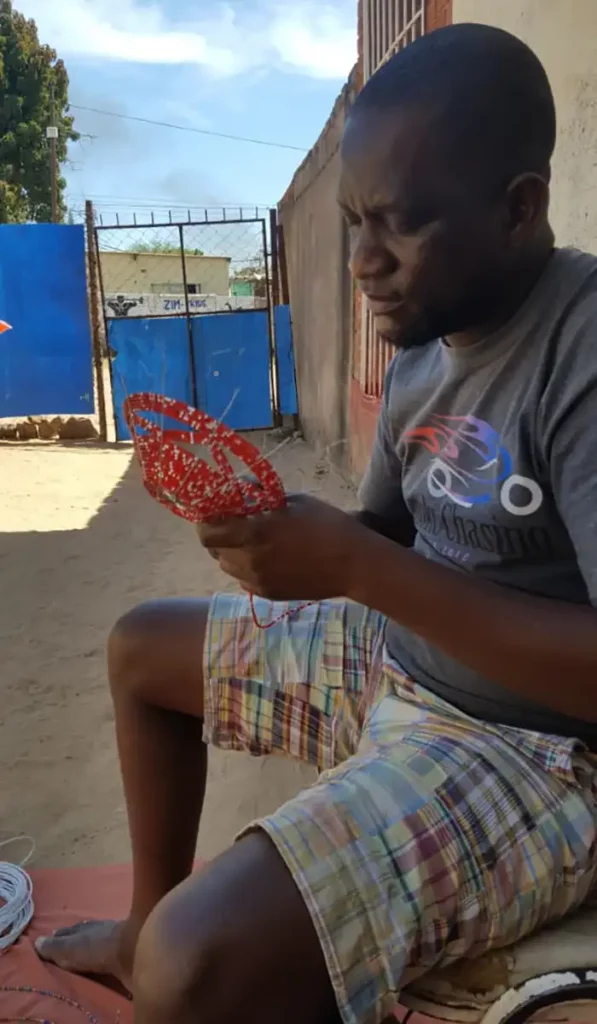
Emma Leslie from Seolo Africa says there is a deep appreciation for Zimbabwean culture at Masuwe Lodge in Victoria Falls, reflected through the thoughtful use of local craftsmanship in both the lodge design and guest experiences.
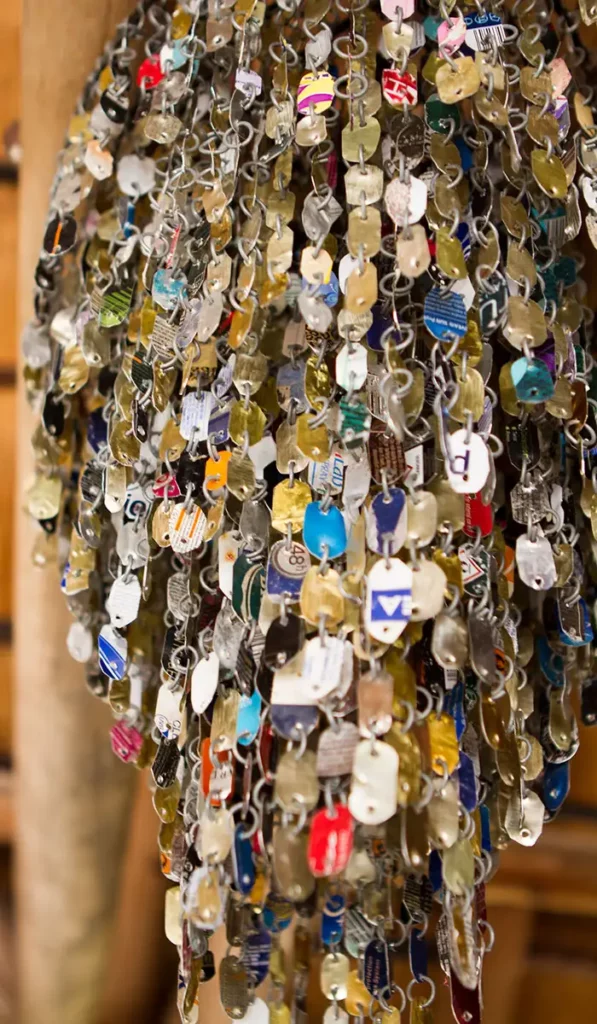
‘Throughout the lodge, handcrafted pieces celebrate the artistry of the Victoria Falls community. Woven baskets displayed in the bathrooms showcase the beautiful work created by local artisans, while a chandelier made from bottle caps in the dining area highlights both creativity and sustainability. These details create an authentic connection between the lodge and its surroundings.’
Masuwe takes care to extend this connection beyond the lodge. ‘Through informal guided tours of Victoria Falls town, guests can meet local artisans, learn how traditional crafts are made, and gain a deeper understanding of how these skills provide income for many families in the community.’
Masuwe incorporates local craftsmanship into its design and experiences for two reasons: to offer guests a more meaningful stay; and to support the preservation of local traditions for future generations.
Further east, on the wide floodplains of Matusadona National Park, Rhino Safari Camp sits in the tree line, with a view straight down to Lake Kariba.
Custodian Marina Massari points to the link with the BaTonga, who live in the Zambezi Valley.
‘When Rhino Safari Camp was built in 1999, they wanted to bring in some of the local culture, which you’ll find in the bedrooms and decoration,’ Marina says.
It goes further: the chalets resemble BaTonga ingazi, traditional huts built on platforms two metres above ground, using mopane poles. They protect you from animals, Kariba floods and humidity.
The chalets are open and the breeze blows from the lake inland. It’s all about natural ventilation. And it must be said, I have slept better at Camp Safari Rhino than any other place – something about the air, the night, the darkness and being absolutely part of nature, yet safe on your stilts from roaming hippos and elephants.
BaTonga have been building ingazi for centuries, their construction methods passed down through the generations.
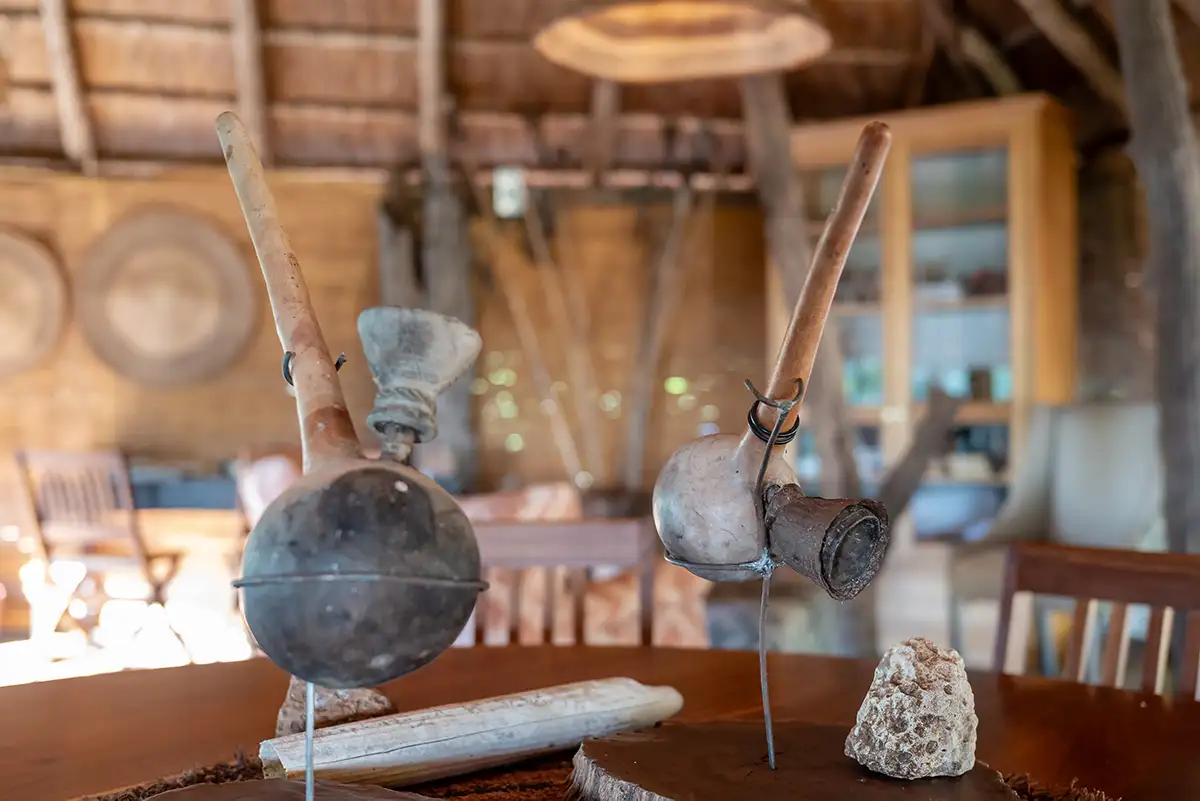
Rhino Safari Camp also has several BaTonga drums, which are used to call guests to meals and to herald celebrations. Other artefacts found dotted around the camp’s main area are traditional BaTonga pot-like pipes called nchelwa or ndombondo, which old women use to smoke tobacco.
There are also Tonga stools and doors. The doors in particular are noteworthy, often made from the mubimba (leadwood) tree. For centuries the BaTonga have carved doors for their huts, using two opposing pegs swivelling within two corresponding holes in the top and bottom. It’s a system found in several West African regions, as well as in Morocco, but nowhere else in southern Africa.
The doors all have individual designs, some have animals or fish but most are geometric patterns. ‘Most of the artefacts we have in camp come from the local villages along the Zambezi Valley,’ says Marina.
Whether it’s a beaded napkin ring or a bright cushion, woven light-fittings, or old mokoros used as planters, camps and lodges are creating a deep connection between guest and heritage.

