Wellness in the Wild:

An Exploration of Place, Culture & Connection through Food

Wellness travel writer Rita Jardine explores how food, ingredients and culinary traditions shape the way we experience a destination.

Photo courtesy Dusty Road

Food is one of the most powerful ways I connect with a place. It shapes how I feel, what I remember, and often reveals more about a culture than anything I could read in a guidebook. What’s cooked in the kitchen tells a deeper story, one that goes far beyond the plate.

Flavour of Place

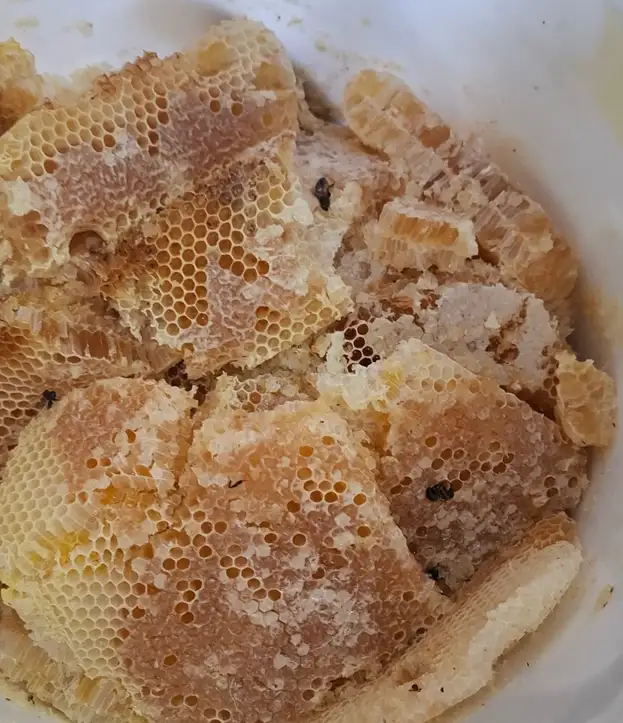
Terroir is often associated with wine, but it applies just as much to the food we encounter when we travel. I’ve felt this most clearly with honey across Africa, where each region carries its own distinct taste. In every spoonful, you can sense the plants, the climate, even the landscape it comes from.

Over time, I’ve learnt to spot roadside hives, and I rarely pass one without picking up a jar to take home as a food souvenir.

The honey is naturally fruity, slightly fermented, and best enjoyed simply. A spoon stirred into soda water is enough. It’s refreshing and instantly transports me back to where it was made.

Natural honeycomb before processing.
Photo courtesy Jiranileo Food Tours.

Circadian Eating

One of the simplest ways to understand a place is to eat what the locals eat. It’s how you meet people, fall into the rhythm of a new country, and often discover the best food. If there’s a queue of locals, you’re in the right place.

Eating this way also helps your body adjust. Starting your trip with local, seasonal food, even a small meal at the local mealtime, supports your circadian rhythm and helps you settle more quickly. Across Africa, in-season produce is naturally rich in fibre, legumes, and fermented foods, all of which support gut health and overall well-being.

From Garden to Plate

I am loving the quiet return to simple, honest cooking. Whether because of logistical necessity or purposeful, gastronomic intent, many safari lodges grow what they can on-site, sourcing the rest from nearby farmers. I always make a point of visiting the vegetable patch. Herbs, tomatoes, greens in the sun, it reflects the care behind every meal. Occasionally, a cheeky monkey eyeing the produce adds to the charm.

It’s scientifically proven that food picked and eaten at its peak holds more nutrients, but it’s the intention behind it that really comes through. You taste the difference.

Lodges like Flatdogs in Zambia’s South Luangwa National Park and Palm River Hotel in Victoria Falls, Zimbabwe grow much of their own produce. If you’re staying, it’s well worth asking for a garden tour.

Photo courtesy Jiranileo Food Tours.

Rooted in Tradition

Numerous African ingredients are now celebrated as superfoods, but for me, they’re part of everyday life. I add moringa or baobab powder to smoothies, a small ritual that instantly takes me back to the places they come from. When my daughter was younger, she would pick up fallen furry baobab pods and suck the pips like sweets, drawn to their sharp, citrusy flavour.

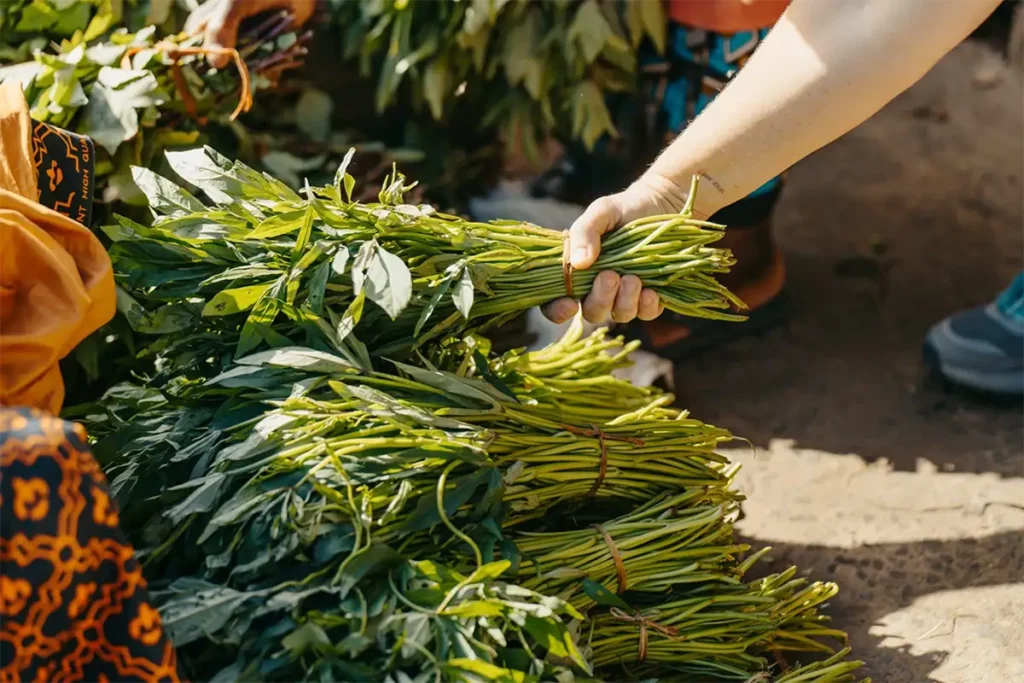
You’ll find these ingredients in local markets, and sometimes right where you’re staying. If you have the chance, try them. It’s one of the simplest ways to taste a place.

Beyond their nutritional value, these foods connect you to tradition, people, and landscape. Choosing them supports the farmers and communities who keep that knowledge alive.

Foraging the Wild

Foraging in Southern Africa reveals a rich, seasonal bounty. In places like Namibia, the contrast is striking, coastal areas offer seaweed, shellfish, and hardy dune plants, while inland valleys hide wild greens, fruits, and even the occasional truffle for those who know where to look.

After the rains in Botswana, mushrooms emerge in abundance. One of my favourite memories is from a “big cat” research camp, where, between tracking collared lionesses, a local guide led us into the bush to forage for termite-mound mushrooms. Cooked simply over the fire, they were earthy, delicious, and made even better by the thrill of finding them ourselves.

Foraging is as much about the experience as it is the food. It gets you moving, connects you to the landscape, and offers a deeper understanding of indigenous knowledge. Just be sure to go with a knowledgeable guide.

Moments That Nourish

The meals that stay with me are rarely about the food alone. They’re tied to place, to atmosphere, to how they made me feel. Sometimes it is a quick snack of groundnuts from a local market, where other moments are drawn out, like the slow simplicity of a simmering poitjke over a crackling fire.

Photo Courtesy Kalahari Tours

One of the things I value most about safari lodges is their rhythm. Rather than large, heavy meals, food is offered in small, thoughtful moments. It feels balanced, intentional, and in tune with the day.

I still think back to a stay at Mombo Camp in the Okavango Delta. On game drives, my guide would bring out small, perfectly chosen treats, both sweet and savoury, along with drinks when we stopped. Always just enough. There are the obligatory sundowners, and then in the evenings, dinner was beautifully prepared, but it was the setting that stayed with me. Soft lamplight, the stillness of the bush, and a quietness that allowed you to be fully present.

That, to me, is what wellness in the wild really is. Not excess, but balance. Not indulgence, but connection. Meals that nourish not just the body, but the experience of being exactly where you are.

Search