Taking Action
In Matopos, where the risk of big cats is absent, Sharon focuses on rhino protection. “Touch wood: rhino poaching is not as it is in South Africa. The rhinos are guarded 24-7. They have scouts, they’re pretty much ear-tagged so that they know where they go.”
Sharon holds an almost religious regard for Matopos, the land of the balancing rocks. “If you haven’t been to Matopos, you really haven’t touched the soul of Africa. It’s about the topography and history and the sacred cultures that are there. It’s like God was playing marbles with all these granite forms, these balancing rocks, stunning.”
Working in non-consumptive tourism started as a means to preserve a lifestyle for the family, but Sharon now calls it “about 80% hard grind and about 20% lifestyle”.
The reward comes from seeing tourists’ reactions to the wild: “When you see that reaction that reminds you every single day how lucky we are and how important it is that we continue to protect it.”
At heart, her life is rich in the modern world’s ultimate luxuries: space and time. “People come to Africa to where there’s vast tracts of land and where the animals roam free… To spend time in that space is so grounding.”
The trick is to safeguard it. “We have to understand that wildlife is a resource and it’s not an infinite resource, it’s finite.” She stresses that if free movement and animal corridors aren’t protected, the alternative is to “fence it and then farm it”, as is done in South Africa.
Take An Example…
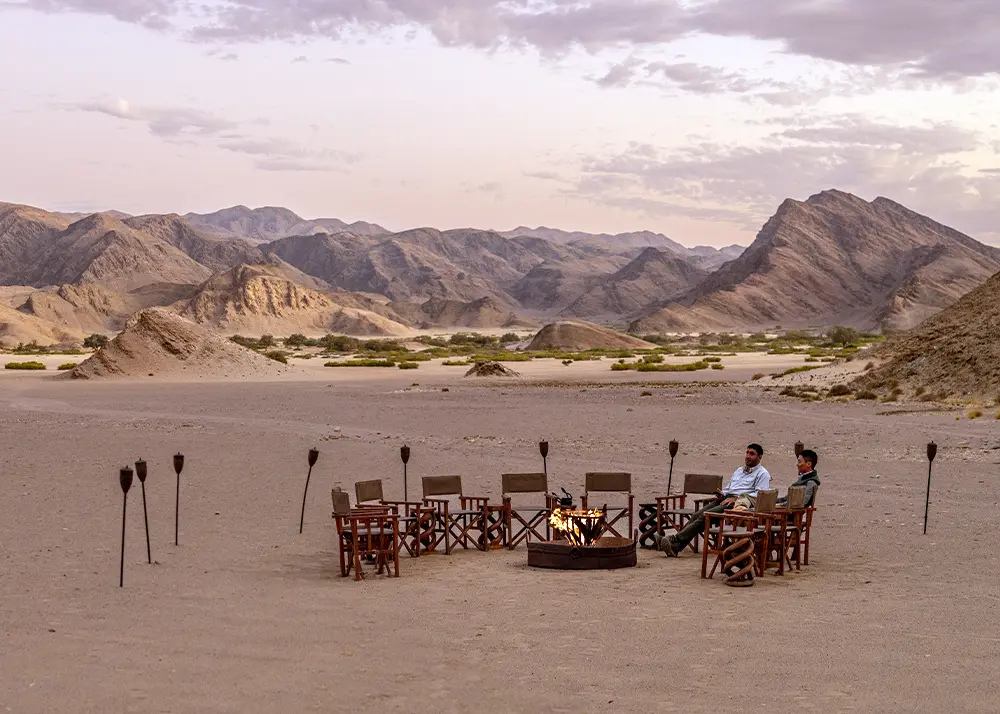
He gives Natural Selection’s Hoanib Valley Camp as an example: It’s in a conservancy and belongs to the community. The company partners with that community, paying it a percentage of revenue earned monthly as rent. Also, almost 100% of employees come from the area.
Natural Selection also supports educational requests from the community, ‘because we believe that … we need to get into commitments that will have a long-term effect on the community, especially education’.
It helps in running schools, and funds university studies for promising students. It also supports short courses that will add value to the community even if it is not directly benefitting the company.
Other projects Natural Selection has undertaken include building a kindergarten and installing solar-powered boreholes.
Regarding human-wildlife conflict, the company is exploring a compensation fund to compensate farmers who lose livestock to predators. It already provides fuel to the rapid response team that answers the call whenever wild animals cross into farmland or villages.
At its camps, Natural Selection Namibia also follows the sustainability path. ‘All our lodges run 100% on solar and there is a sustainability department that ensures that we practise what we preach. No plastics and everything is finely monitored to check its environmental effect,’ he explains.
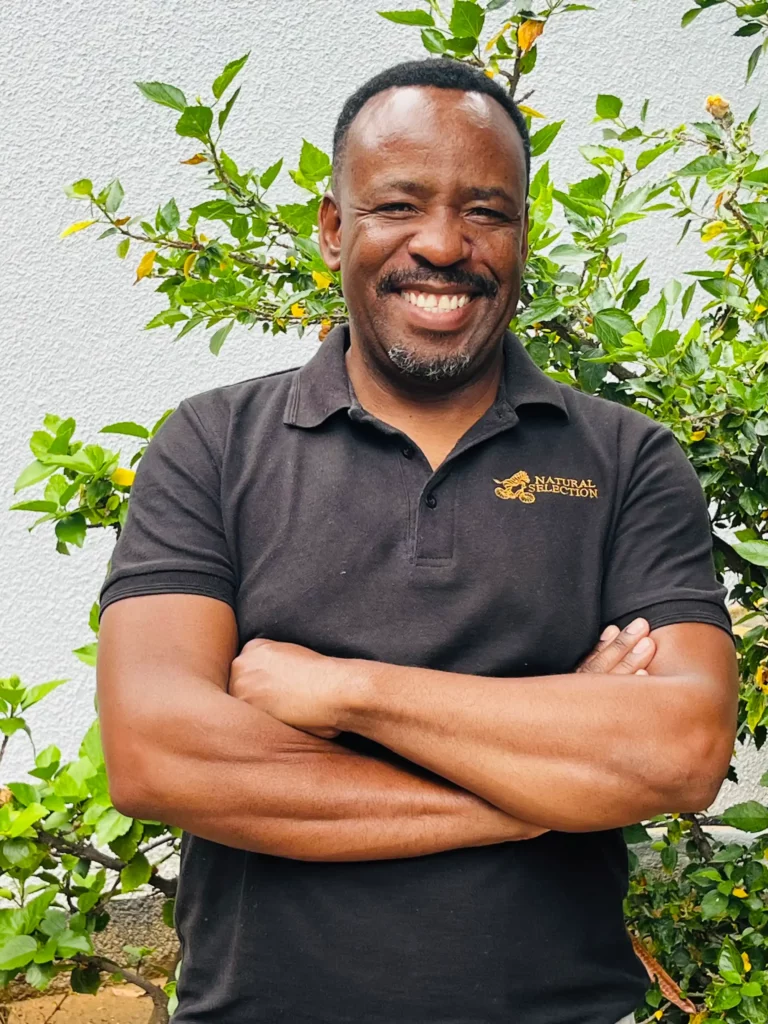
Ally Karaerua The Person
What is something surprising about you that others may not know?
I’m a shy person. I always have to build courage to start opening up to new people.
What do you love about the wild?
I love the beauty of creation and the fact that each animal is different, each animal brings a different dimension to the planet. I am particularly fond of the varied landscapes of Namibia.
What makes Namibia special?
The first thing you think when you think about Namibia is the desert. But if you go to the Kalahari area you have a slightly vegetated desert, then when you go to the Skeleton Coast you find a completely barren desert, where it does not rain.
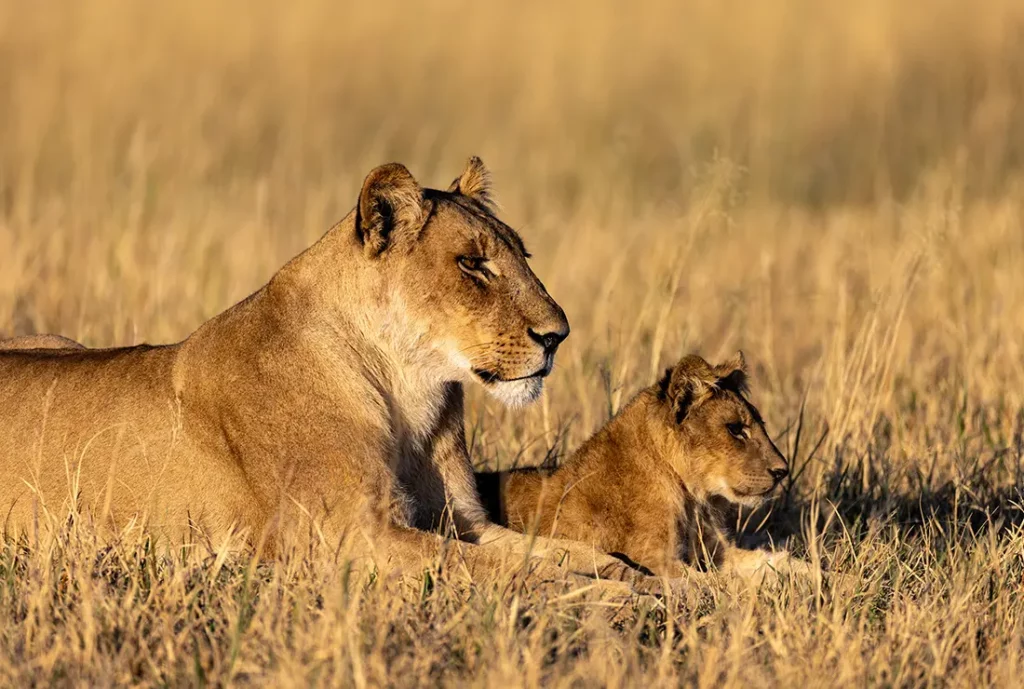
The Skeleton Coast is an absolute marvel, where you go into these velvety dunes, beautiful. And then you get into semi-desert areas where you find desert-adapted animals, especially elephants, oryx, springboks, giraffe and lions. They’re just living there, amid scarcity, and they have adopted.
What three words describe Namibia?
Space, tranquillity and soulfulness.
What are your top tips for a visitor to Namibia?
First go to the tranquil desert, appreciate the
Sossusvlei, a Unesco World Heritage Site; go to Namib-Rand, a private reserve that is beautiful, soulful and one of the world’s unspoiled places. Visit the Himba people: an interaction with these nomadic people will change your life’s perspective for good.
Stalk the desert-adapted animals of north-west Namibia in the Hoanib and Hoarusib ephemeral rivers, and visit the fairy circles at Giribis Plains.
What are you waiting for? Book your trip to
Namibia with Africa’s Eden members.
Africa-domiciled travel agents selling itineraries across Africa’s Eden destinations can discover new opportunities at the Africa’s Eden Travel Show – Africa Edition, created to strengthen regional connections and drive business.
Globally based travel agents selling into Africa’s Eden destinations should register early for the next
Africa’s Eden Travel Show – Global Edition to connect directly with the region’s leading luxury travel partners. To extend those connections even further, explore the full list of upcoming
Africa’s Eden events and find a roadshow coming to a city near you.